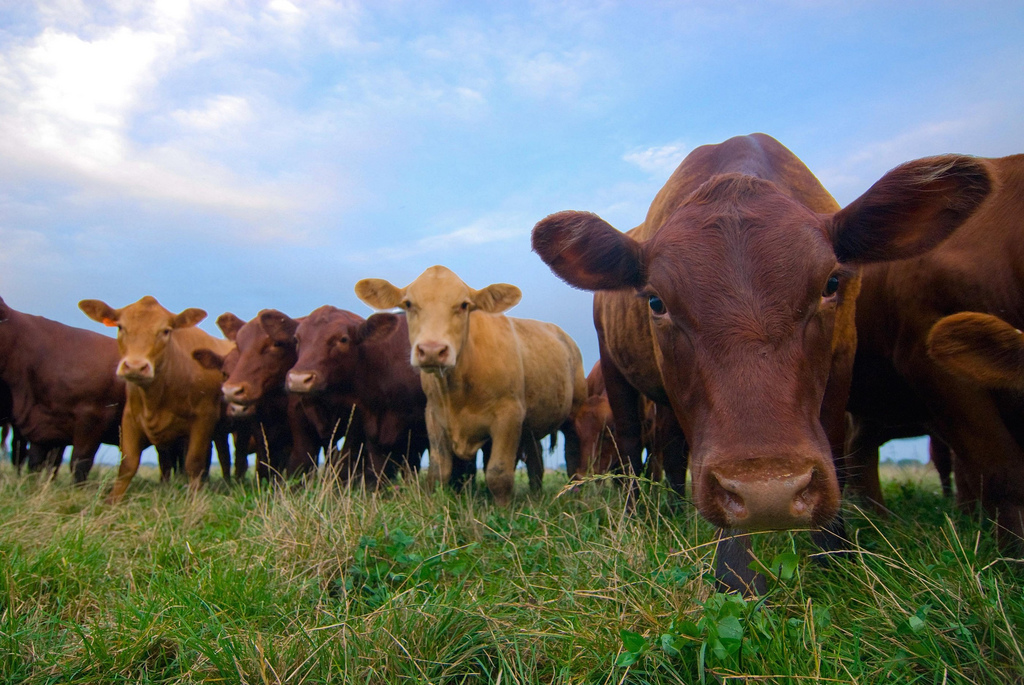
Cattle on pasture. USDA file photo by Ryan Thompson, public domain.
SEDALIA, Mo. — Soybeans rejected by a grain buyer may offer Missouri beef producers another feed source, but their value depends on testing, ration costs and whether they can be fed safely.
University of Missouri Extension livestock specialist Gene Schmitz says whole soybeans can supply both protein and energy to most classes of beef cattle. Their high fat content, however, limits how much belongs in the ration, and raw beans can create serious problems when combined with certain supplements.
Test rejected beans before feeding
A load rejected for excess moisture, weather damage or another quality problem should not automatically be valued like sound soybeans.
MU Extension beef nutrition specialist Eric Bailey recommends checking protein, fat and dry matter. Mold and mycotoxin testing may also be warranted, depending on the condition of the beans.
Chemically treated soybeans should not be fed to cattle.
Once the beans’ nutrient content is known, producers can compare their cost with other grain and byproduct feeds. The comparison should reflect the nutrients needed by the cattle being fed, rather than the purchase price alone.
Fat content limits daily feeding rates
Schmitz outlines general feeding limits of 2 to 3 pounds of whole soybeans per head daily for mature beef cows, depending on feeding conditions. For weaned calves, stockers and replacement heifers, the suggested range is 1 to 2 pounds per head daily.
Those amounts must be considered alongside the other ingredients in the diet. Whole soybeans contain approximately 18% to 20% fat. The MU guidance recommends keeping total dietary fat at or below 5% in beef cattle rations.
Too much fat can interfere with fiber digestion and reduce animal performance. A nutritionist can calculate an appropriate inclusion rate for the specific ration and class of cattle.
Keep raw beans out of creep feed
Raw soybeans contain a substance that inhibits trypsin, an enzyme involved in protein digestion. This is a concern for young nursing calves whose rumens are not fully developed.
Schmitz advises against including whole soybeans in creep feed. Calves around 2 to 3 months old and weighing less than approximately 300 pounds may be vulnerable to the digestive effects.
Check supplements for urea
Another concern is urease, an enzyme found in raw soybeans. It speeds the breakdown of urea into ammonia. When raw beans and urea-containing feeds are consumed together, ammonia can accumulate rapidly enough to become toxic.
Producers should not feed raw whole soybeans alongside supplements containing urea or other sources of nonprotein nitrogen. That includes checking the ingredients in protein tubs, liquid supplements and other feeds already available to the herd.
A feeding plan should account for everything the cattle can consume, including supplements offered separately from the main ration.
Schmitz recommends working with a nutritionist before incorporating whole soybeans into a feeding program. Producers can contact him at schmitze@missouri.edu or call the Pettis County Extension Center at 660-827-0591 for more information.
Leave a Reply