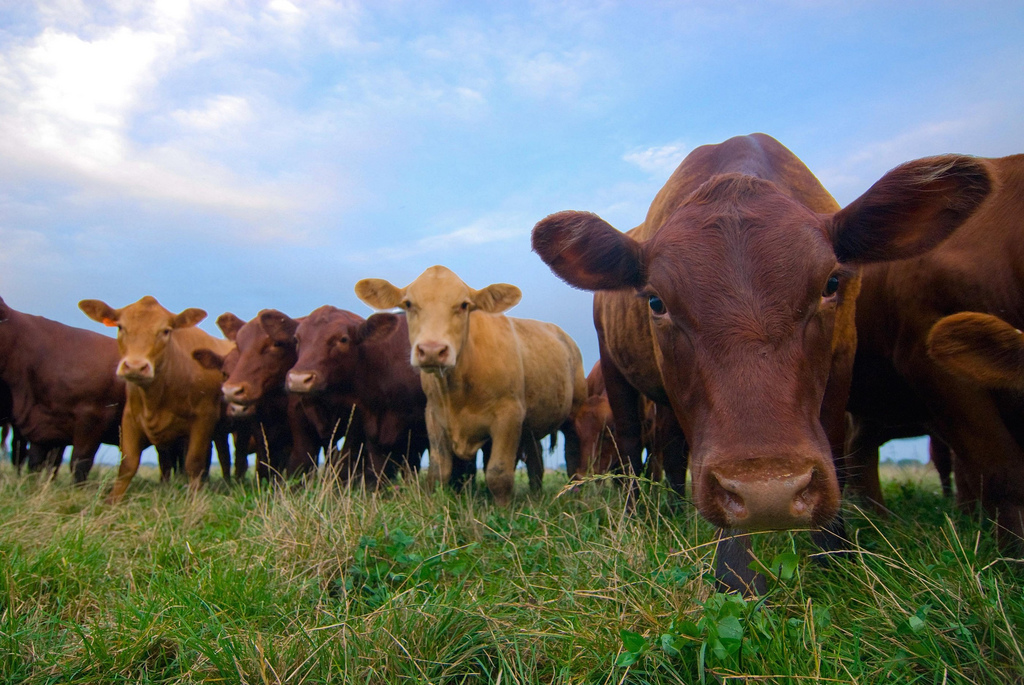
Cattle on pasture. USDA file photo by Ryan Thompson, public domain.
Eight more companies have committed to USDA’s voluntary Product of USA label, including processors in Illinois and Indiana, expanding participation in a program intended to identify meat and poultry produced entirely in the United States.
USDA announced the additions Oct. 30. More than 30 companies have committed to the label since the department began its national awareness campaign earlier this year.
For Missouri livestock producers and shoppers, the program centers on a distinction at the meat counter: a qualifying American-origin claim covers where an animal was born and raised as well as where the product was processed.
What the label means
Under the standard that took effect Jan. 1, the unqualified Product of USA claim is reserved for qualifying meat, poultry and egg products from animals born, raised, slaughtered and processed in the United States.
For products containing multiple ingredients, the requirements also address the origin of other ingredients and where preparation occurs. Spices and flavorings have an exception to the domestic-ingredient requirement.
Participation is voluntary. The announcement does not create a requirement for every package of beef or other covered product to carry an American-origin label.
The absence of the voluntary claim, by itself, does not establish that a product is imported.
Midwest companies join participants
The latest participants include Krogman Home Grown Meats in Illinois, Legacy Maker Farms in Indiana and Demkota Ranch Beef in South Dakota.
USDA also names Mesorah Farms in Pennsylvania, KJ Poultry in New York, Strauss Brands in South Carolina, Delta Pride Catfish in Mississippi and Eel River Organic Beef in California.
Agriculture Secretary Brooke Rollins says wider use of the label is intended to help consumers identify American-produced food and support domestic farmers, ranchers and processors.
Origin claims remain separate from other labels
The Product of USA claim identifies origin. It does not, on its own, describe whether an animal was grass-fed or whether a product meets organic standards.
USDA says additional processors have expressed interest in adopting the voluntary label in the coming months.
Leave a Reply