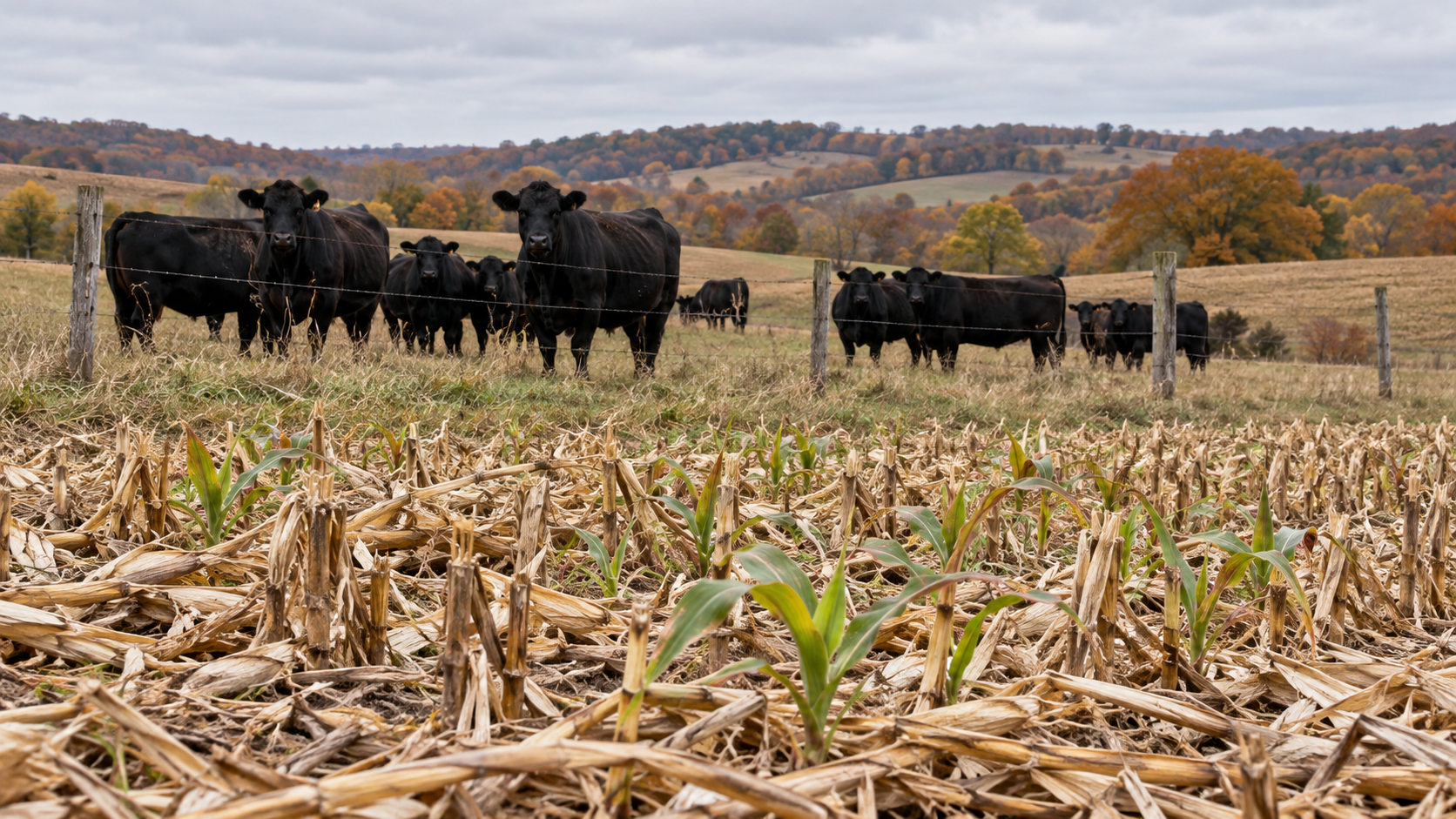
Image: AI-generated illustration of cattle beside a harvested cornfield.
Northeast Missouri cattle producers looking to stretch hay supplies with grazing after corn harvest should check volunteer corn for nitrate before opening the gate, according to a new University of Missouri Extension advisory.
MU Extension agronomy specialist Joshua Shaw says cold weather, drought and excess nitrogen can interfere with a corn plant’s ability to turn nitrate into protein. The resulting buildup can make the forage unsafe for livestock.
The advisory, published Oct. 30, addresses questions Shaw has received about grazing new corn growth in harvested fields. Volunteer corn grows from grain left behind during harvest.
Testing helps determine grazing safety
Shaw recommends testing stalks to determine whether volunteer corn is suitable for livestock. A field’s appearance alone does not provide a nitrate test result.
According to the advisory, nitrate levels can remain a concern as plants recover from drought. Shaw says the recovery period after rain can take about two weeks. Testing provides a way to assess the forage rather than relying solely on the time that has passed.
Producers can contact their local MU Extension center for help collecting and submitting samples. Shaw’s sampling instructions call for gathering sections from 10 to 20 corn stalks, leaving the lowest 6 inches of each stalk and collecting the next 6 to 8 inches above that point.
The samples should be placed in a plastic bag and taken to an Extension center for submission to a laboratory.
The advisory describes test results in four categories, ranging from safe to toxic. Elevated results can limit how much of the forage belongs in an animal’s diet, while forage classified as toxic should not be fed. Shaw identifies pregnant animals and young livestock as particular concerns when nitrate levels are elevated.
Corn residue can help stretch hay
Grazing harvested cornfields can provide an additional feed resource, but the different materials remaining after harvest vary in nutritional value.
Shaw says corn husks, cobs and stalks average about 4% protein, compared with approximately 9% for leaves and grain. Those differences matter when evaluating how well the available forage meets a herd’s needs.
Volunteer corn adds another consideration because living plants can accumulate nitrate under stressful growing conditions.
Consider the field’s fertility needs
Shaw also encourages producers to account for nutrients removed when livestock consume forage. Grazing decisions should include consideration of the field’s fertility needs along with the potential savings in purchased or stored feed.
Northeast Missouri producers seeking sampling assistance can contact their county MU Extension center. Shaw, who serves six western Missouri counties, can also be reached at jtshaw@missouri.edu or through the Vernon County Extension center at 417-448-2560.
Leave a Reply